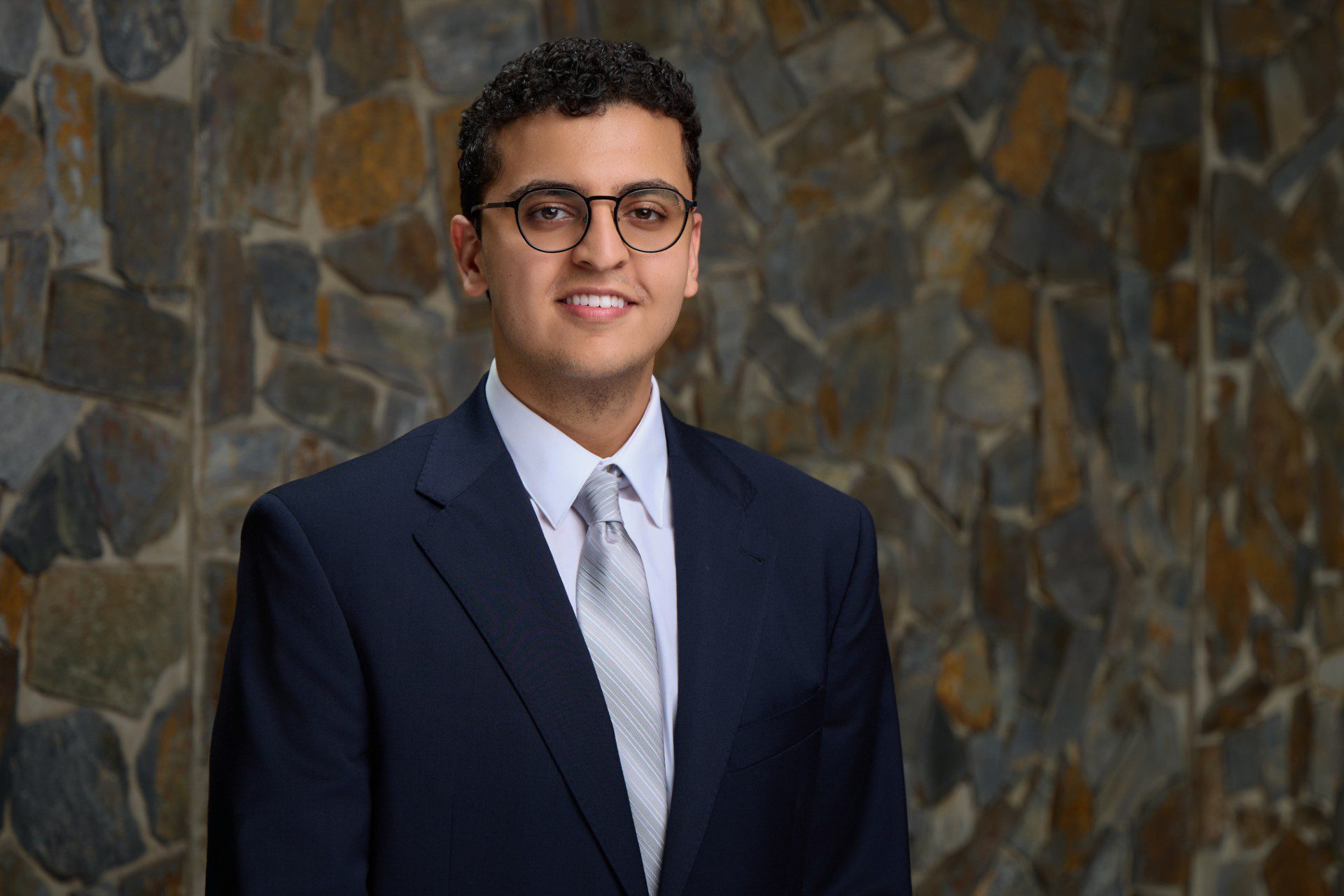
In the summer of 2025 Mohamed Aljahmi interned at the Museum of Chinese in America through the Bloomberg Arts Internship: College program. Mohamed is currently completing his undergraduate studies at Queens College, conducting quantitative research on race and ethnicity in American politics, and preparing for political science Ph.D. programs. He shared his experience at the Museum of Chinese in America in the article below.
During the summer of 2025, I joined the Museum of Chinese in America (MOCA) as a
Bloomberg Arts Intern through Studio in a School, with a clear objective: to assist in the
digitization of the Emile Bocian collection. As a student of Political Science and Sociology, I
was eager to see how community history is preserved behind the scenes. My role involved the
technical processing of thousands of photographs and negatives. This was funded by a grant
from the National Historical Publications and Records Commission as part of a two-year
digitization and cataloging initiative. Our specific focus was processing Emile Bocian’s 1974 and
1975 negatives, which, amazingly, represent only about 10% of his work in the MOCA
collection spanning the mid-1970s through the 1980s. This grant ensures that Emile Bocian’s
unique documentation of Manhattan’s Chinatown is preserved for a digital-first generation of
researchers and residents.
Throughout my time there, I had the opportunity to meet many researchers working on
their dissertations and learned a lot about the graduate student experience, a path I hope to pursue
in the future. Seeing these researchers rely on archival materials gave me a new appreciation for
the physical work required to build a digital database.
Initially, I had little to no experience working with film negatives, aside from one time in
third grade when we went on a trip to a film studio and got to hold one. It took about a week to
get a grasp on the workflow because the process was highly meticulous. First, I would carefully
take an envelope from the box that contained film negatives and sometimes Polaroids. Because
these negatives usually consisted of 36 images per roll, cut into six strips, they first needed to be
rehoused into negative sleeves according to their negative number. After that, I would place them
into a negative container to be processed on large scanners. After initiating the scan, I would
monitor the batch for about 2 to 10 minutes, depending on the volume of negatives. Scanning at
such a high resolution took time, but it is the best approach for long-term preservation, especially
since physical negatives can deteriorate over time. During this time, I would talk with other
Museum teams where my fellow interns were working, such as the curatorial or education teams,
to see what projects they were working on. One who stood out to me was my fellow intern,
Dean, who was redoing the text plates on the exhibits in both Chinese and English.
Once I got used to the scanning equipment, the really detailed work began. I started
properly labeling the files and editing them in Photoshop. This was something I hadn’t had too
much experience with, but with the help of my fellow intern, Caitlyn, I was able to learn. We
also had to name the folders correctly, which was a bit difficult when some of the handwriting
was fading or illegible. However, through collaborating with several colleagues and getting their
insights, we were able to label the archives accurately. This cataloging process ensures that the
research I conducted, along with the content we deciphered from the photographer’s handwritten
notes, gets entered directly into the database. Now, future researchers can use keywords to locate
specific images among the nearly 40,000 records in MOCA’s collection.
Part of working with the negatives was identifying images for deeper research. One
standout piece from the collection was a photograph of Big Bird in Chinatown. When I saw it, I
was so confused as to why he was there. Through further research, I found that it was part of a
special called “Big Bird in China,” in which Big Bird visited numerous cities in China, including
Beijing and Shanghai. I was able to write an article on it in the political context, specifically how
the Cold War was raging and how the U.S. needed allies in the region. With the Russian-Chinese
alliance strained at the time, the U.S. wanted to establish relations with China, so the special was
conceived. The impact of digitizing these specific photos actually went beyond academic
research. After we made the Big Bird records available online, community families helped
identify the children featured in the television program. It perfectly illustrated how digitized
collections can foster real community engagement and contribute to much more complete
documentation.
Overall, this was a very illuminating experience. Working with the collection allowed me
to see photos of Chinatown in the ‘70s and ‘80s. Another distinct memory was seeing photos of
an old street fair. While I wasn’t able to research it, there were so many stories in these photos
that we were scanning and editing to show researchers. The Big Bird photo is just one example,
because without it, I would never have known how the U.S. made numerous real efforts to
establish a good relationship with China through television. Overall, I had a wonderful
experience as a Bloomberg Arts Intern for the collections department. I learned not only how to
scan negatives, but how to write articles for a museum-focused audience and increase my
proficiency in Photoshop. As I look toward my future as a graduate student, I know these
hands-on archival skills and the understanding of how history is actively preserved will be
invaluable.